

Winter Storage vs. Winter Tires: Which Makes Sense for a Second Car?
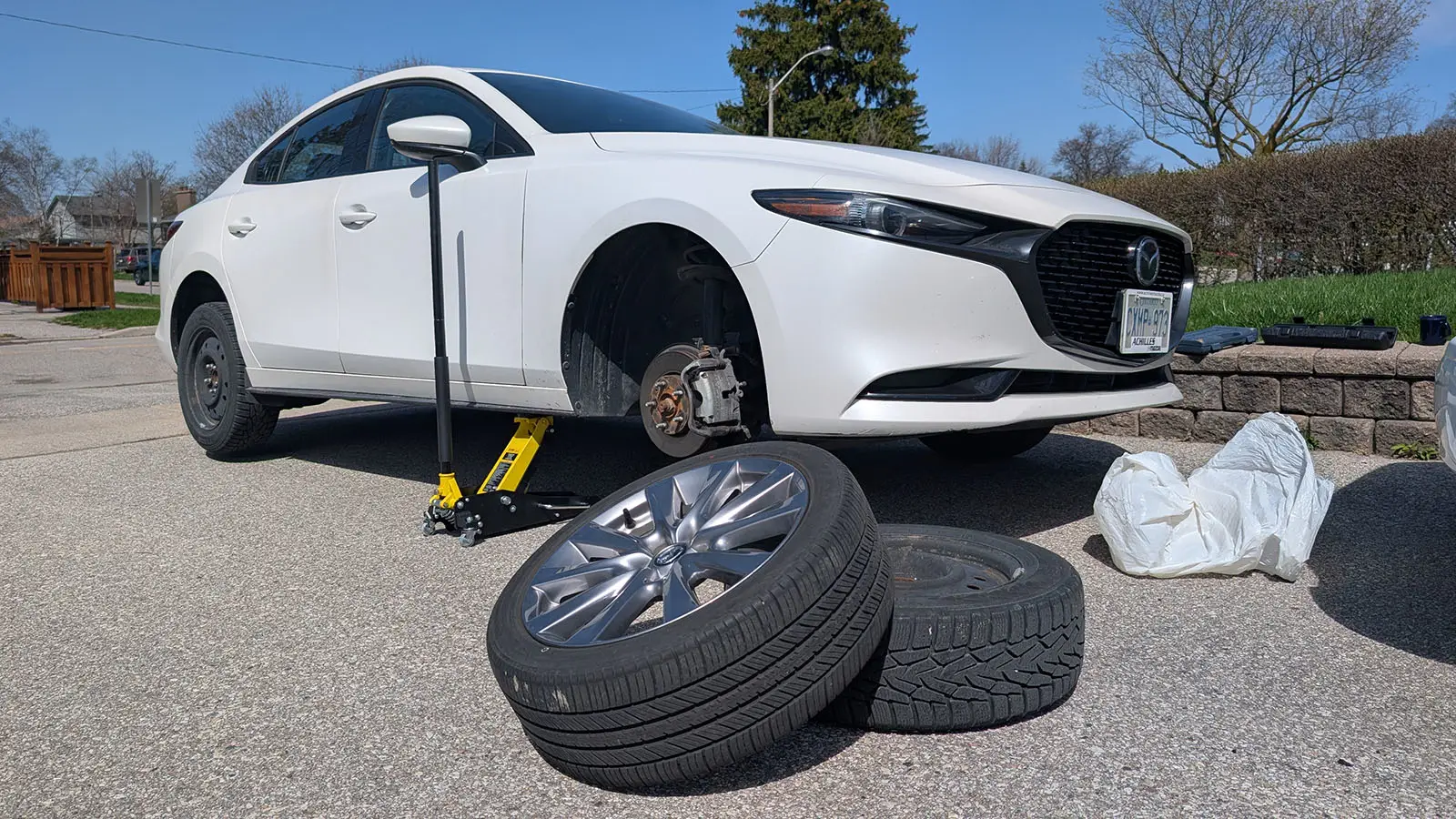
Storage wins if the car sits more than it moves. Winter tires win if you would genuinely drive it weekly. The deciding variable is not cost, since the two land closer together than people expect, but how often the car actually leaves the driveway and whether salt on that particular car is something you would regret.
Which is cheaper, winter storage or a set of winter tires?
Over a single winter they are usually closer than people assume. Over five winters, tires amortise and storage does not, so the tire route wins on pure cost. What that comparison leaves out is that storage is buying something tires cannot, which is five months of the car not accumulating salt, mileage or exposure.
Winter tire costs scale steeply with fitment. A common 17-inch size is a fraction of a staggered 20- or 21-inch performance fitment, and in the larger sizes the number of winter options available in Canada drops from dozens to a handful. Budget for more than the tires themselves:
- A second set of wheels, if you would rather not remount twice a year
- TPMS sensors for that second set on most modern cars
- Two changeovers a year, plus balancing
- Off-season storage for whichever set is not on the car
[STAT NEEDED: current Canadian retail price ranges for winter tires by common wheel diameter, ideally 17-inch through 21-inch]
Two things offset that. Your summer tires last roughly twice as long in calendar terms, because annual mileage is split across two sets. And since January 2016, Ontario regulation has required auto insurers to offer a winter tire discount, though each insurer sets its own amount, qualifying dates and proof requirements. Ask your broker what yours actually applies and what it needs from you, since none of that is standardised.
On the storage side, MyAutoStorage lists standard vehicles from $250 per month and a seasonal winter package from $1,250 for [duration TBC]. Full storage rates and package options are published, and monthly plans carry no long-term commitment if your dates are uncertain.
How often would you actually drive the car in winter?
Count the trips honestly, because this is the question that decides it. If the answer is fewer than about four outings a month, the car is not earning the exposure it takes, and every one of those trips is putting chloride into seams for a drive you could have made in the other car.
People consistently overestimate here. A weekend car that gets used most Saturdays from May to October does not usually get used most Saturdays in January. Cold mornings, salted roads and short daylight cut the real number well below the intended one, and the car ends up sitting in a driveway on winter tires it never needed.
The genuine exception is the backup role. If the second car is what you drive when the daily is in the shop, storing it removes that, and a week without a vehicle costs more than a set of tires. Pickup and delivery across the GTA changes this somewhat, since a stored car can be brought to you, but not on the same day.
Which cars should not be on winter tires at all?
Some cars cannot take them, and some should not be driven through a salted winter regardless of what is fitted. Both groups point the same direction.
- Sizes with no winter option. Very wide or staggered fitments often have two or three winter tires available in Canada, sometimes none. A smaller-diameter winter wheel package is the usual workaround, and it needs brake caliper clearance checked before you buy, since many performance cars have a minimum wheel diameter.
- Classics on period rubber. No winter tire exists in most period sizes, and the value of the car is tied to originality and a clean underbody. That is the core case for classic car storage rather than a seasonal tire swap.
- Convertibles. Fabric and vinyl rear windows go brittle in the cold, and folding a top below roughly −10 °C can crack a vinyl backlight permanently.
- Aluminum-intensive and mixed-material bodies. Where aluminum panels meet steel fasteners with a chloride film bridging them, the aluminum corrodes preferentially. Modern construction has made this more common rather than less.
- Anything where original paint or a rust-free underbody is a material part of the value. Once chloride is in a rocker seam, it is not coming back out with a wash.
What does a GTA winter actually cost the car?
Three things, only one of which shows up on a receipt. Salt exposure, mileage on a car whose value depends on not having much, and five months of sitting somewhere visible.
Road salt is the one that compounds. Ontario crews pre-treat with brine ahead of forecast events, so a car driven on a clear, dry road the day before a storm still picks up a chloride load. Calcium and magnesium chloride blends used for colder events do not dry out. They hold moisture from the air and keep working in seams and cavities for months afterwards.
Mileage matters differently on a second car. A weekend car with low kilometres carries a premium that winter use erodes faster than the same distance in summer, though quantifying that is difficult.
[STAT NEEDED: effect of documented winter driving exposure on Ontario resale values for enthusiast vehicles]
The third cost is theft exposure. A second car parked in a driveway from November to April is stationary and unmonitored for five months. Toronto recorded 7,305 auto thefts in 2025, a 32.2% year-over-year decline according to Toronto Police Service, and Ontario fell from 24,877 in 2024 to 19,319 in 2025. The trend has not held everywhere: Équité Association reported Toronto up 8.8% in the first half of 2026 while the provincial total fell 8.4%. Vehicle choice matters to the risk as well, since the Lexus RX topped Ontario’s most-stolen list with 2,083 thefts in 2024, which is why luxury car storage is often driven by the security argument rather than the corrosion one.
When do winter tires make more sense than storage?
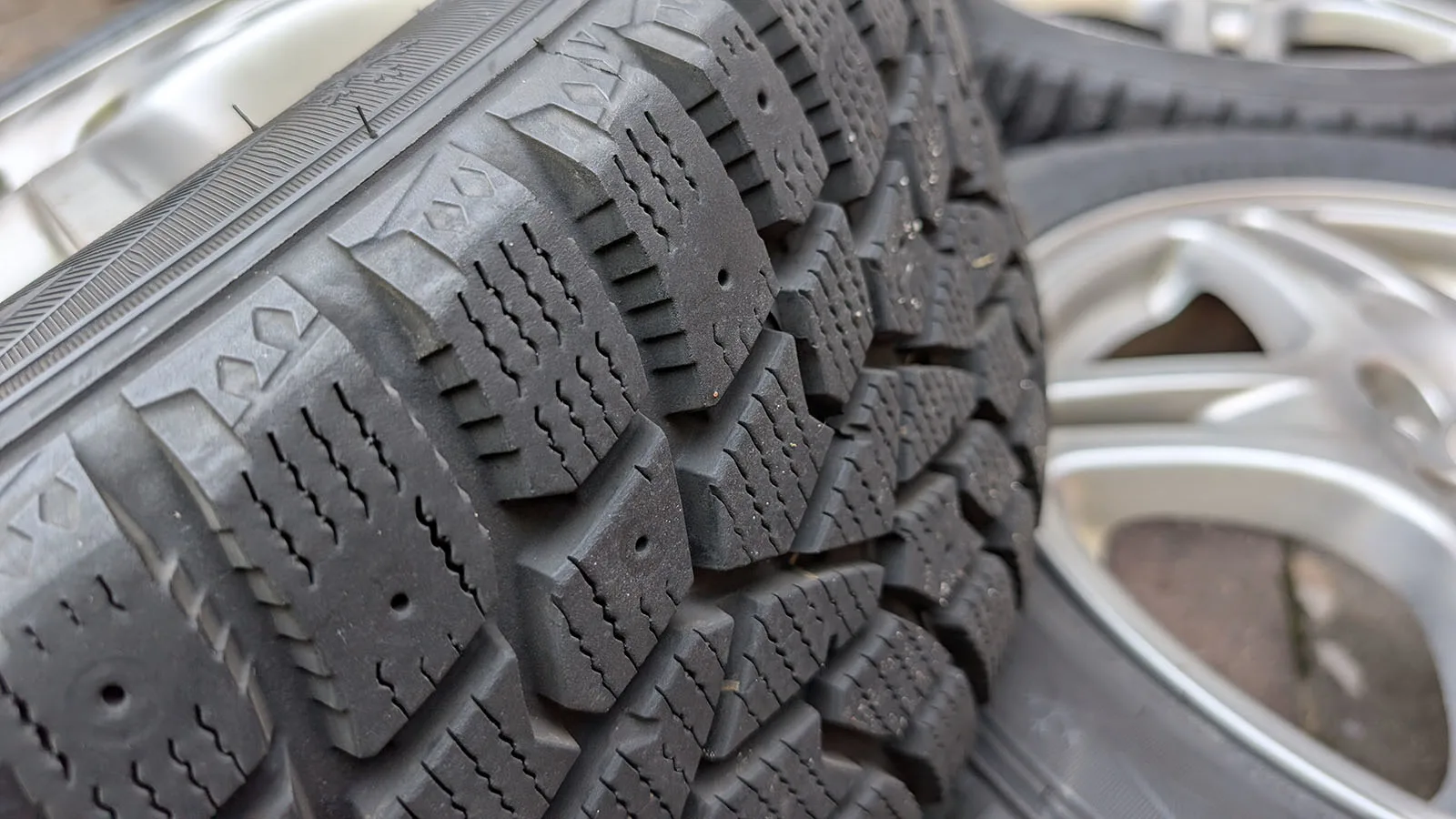
Often enough that it is worth saying plainly. Storage is the wrong answer for a car that gets used, and a good set of winter tires on a car you drive weekly is money better spent than a storage spot for a car you would rather be driving.
Winter tires are the better call when:
- The car is your actual winter vehicle, or your only backup when the daily is off the road.
- It was bought to be used and carries no originality or low-mileage premium.
- You would drive it weekly or more, honestly counted.
- It has already been through several salted winters, so the marginal exposure of one more is small.
- You have a heated garage with power at home, which removes most of what a facility provides.
Fit four, not two. Mixing winter tires on one axle with all-seasons on the other produces a grip imbalance that is worse than four matched all-seasons, and the effect is most dangerous mid-corner on a lift-off. Look for the three-peak mountain snowflake symbol rather than M+S, since M+S is a manufacturer self-certification while 3PMSF is a tested standard for severe snow service.
Can you do both?
Most people who ask this question are really asking which car goes where, not whether to pick one approach for everything. The common GTA arrangement is winter tires on the daily driver and storage for the weekend car, and it costs less than it sounds because the two are solving different problems.
The other version is a winter beater. A cheap used car on winter tires takes the salt, the good car goes away for the season, and the daily driver stays out of the worst of it. That costs more than either option alone, but it is the only arrangement where nothing you care about touches a salted road.
The combination not worth doing is fitting winter tires to a car you then store anyway. Winter compounds are soft, they age whether you use them or not, and a set that sits unused for a season has given you nothing.
How MyAutoStorage fits into the decision
MyAutoStorage is a boutique facility in Etobicoke run by two brothers, Mike and Rob, both long-time collectors, roughly 12 minutes from Pearson. Every vehicle in winter car storage in Toronto gets the same specification with no tiers: climate control with regulated temperature and humidity, a battery tender connection, tire pressure monitoring, fuel stabilisation, regular visual inspections, a cover, gated access with logged entry and 24/7 CCTV. Pickup and delivery across the GTA is available if losing access is the thing holding you back. Capacity is deliberately limited and seasonal spots usually fill by late September. To talk through a specific car, get in touch or call +1 (416) 571-7955.
FAQ
Do I need winter tires if my car is all-wheel drive?
All-wheel drive helps you accelerate and does nothing for braking or cornering, both of which are tire jobs. An all-wheel-drive car on all-seasons at −10 °C stops no better than a front-wheel-drive car on the same tires. If the plan is to drive the second car through winter, the drivetrain does not change the tire answer.
Can I fit winter tires to a car with large low-profile wheels?
Usually, by dropping to a smaller-diameter winter wheel package with a taller sidewall, which also gives better snow performance. The constraint is brake caliper clearance, since many performance cars have a minimum wheel diameter published by the manufacturer. Check that figure before buying anything. In the original large fitment, winter options are often very limited.
Do all-weather tires count instead of winter tires?
All-weather tires carrying the three-peak mountain snowflake symbol are a genuine compromise between the two, and they let you skip the seasonal changeover. They do not match a dedicated winter tire in deep snow or on ice. Whether your insurer treats them as qualifying for the winter tire discount varies, so confirm with your broker before assuming.
How long do winter tires last if I only drive a few thousand kilometres a year?
Age tends to end them before wear does at that mileage. The compound stiffens over time whether the tires are used or not, and low annual use means they reach that point with tread left. That is worth factoring into the cost comparison, since a set bought for a car you rarely drive may need replacing on age rather than on kilometres.
Is it cheaper to store a second car or keep it on the road through winter?
The storage cost is straightforward to compare against tires, changeovers and fuel. What is harder to compare is how each arrangement affects your insurance, since insurers treat stored vehicles differently from ones in regular use and the specifics vary by company and policy. Get that number from your broker before running the comparison, because it can move the total either way.